Why Animal Memes are Marketing Gold

The concept of an animal meme is simple: take a photo of a cute or silly looking animal, add a witty caption, and then share it on the Internet. It’s been around for years, it’s over played, but yet you still read every one you come across. Let’s break down why memes work. Highly consumable and easily sharable content (an image in this case)… check. Short, easy to read text… check. A dash of humor… check. We have ourselves a winner.

funny-cat-meme-i-dont-always-meow-as-loud-as-i-can

Online users are gravitating more and more towards rich content. We see this through the explosion of networks such as Pinterest and Instagram, which are made up almost entirely of images and very light on text. Blogs that contain images typically resonate better with readers than those without. Social media posts which contain an image or video see high engagement rates.

Continue reading “Why Animal Memes are Marketing Gold”

How to Keep Your Prized Marketing Materials out of the Dreaded Junk Folder

Do you feel like you are in a constant battle with your Outlook inbox? Feverishly trying to respond to emails so that the daunting bold number next “Inbox” steadily inches closer to zero. Desperately sifting through emails with a cursory scan to make sure you are not neglecting your key company stakeholders. Praying that maybe, just maybe, you will learn that there is a 26-hour day coming up, giving you a whole extra 120 minutes to sort, file and compartmentalize your inbox.

You are not alone.

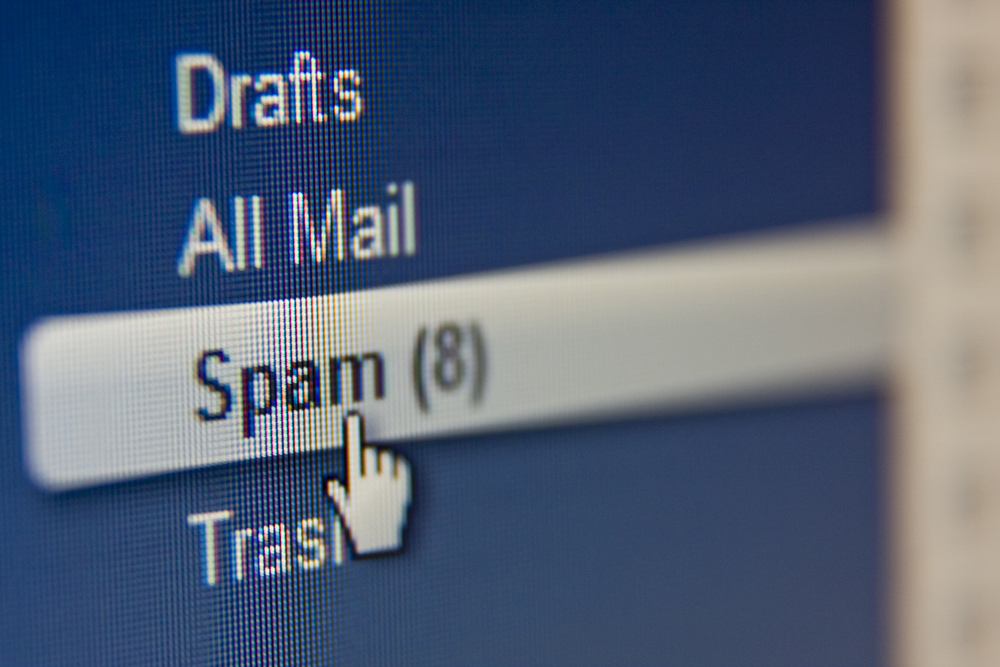
The entire world seems to be lost in a sea of emails. In fact, 144 billion emails are exchanged every day worldwide and of those, 68.8% are spam. Moreover, individual email volume rose 5.4 percent in the fourth quarter of 2012 when compared with 2011. So not only are you drowning in the whirlpool of business critical messages, but you are also forced with having to reel in the imperative emails over the “seaweed.”

shutterstock_94977535So as a marketer, how do you ensure that your corporate eNewsletters stay good and far away from the feared “deleted items” folder? By considering the following:

Continue reading “How to Keep Your Prized Marketing Materials out of the Dreaded Junk Folder”

Martha Stewart Joins Match.com – And How It Can Help Your Business

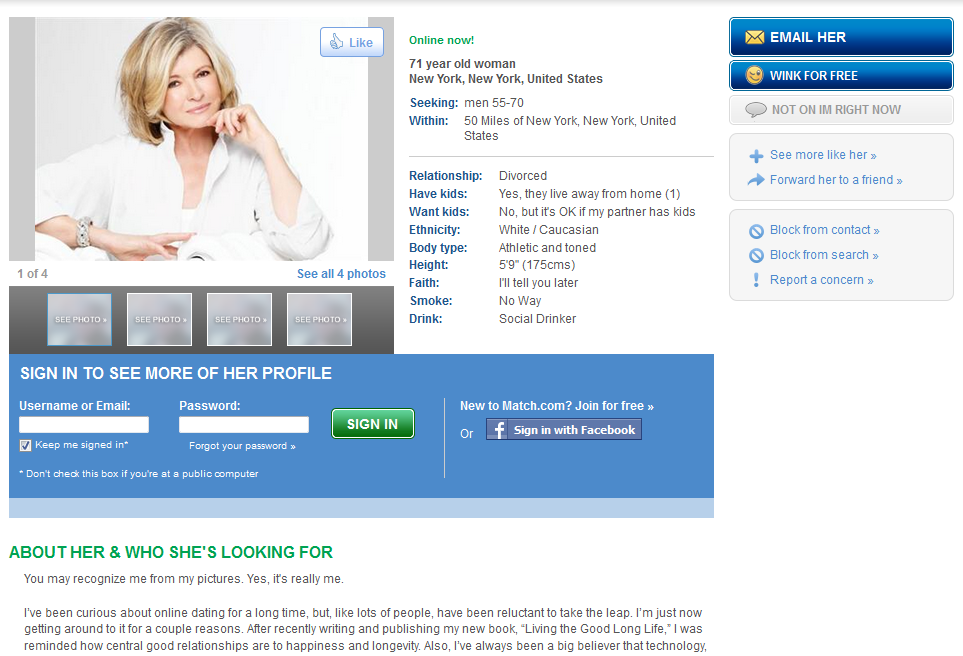
After plugging her new book, Living the Good Long Life last week, Martha Stewart revealed to NBC’s Matt Lauer that she was looking for love on Match.com.  “I’ve always been a big believer that technology, if used well, can enhance one’s life. So here I am, looking to enhance my dating life,” she writes in her online profile.

MarthaStewart

Rumors have swirled that the domestic diva is not actually looking to find her match, but rather seeking publicity to sell more copies of her newly penned book. After all, her Match.com username also happens to also be “thegoodlonglife.” Whether or not the rumors are true, she has been successful in creating a buzz.

Continue reading “Martha Stewart Joins Match.com – And How It Can Help Your Business”

What Happens When Marketers Rebuff Social Media…

I love when I am in the presence of a business executive who scoffs at the notion of incorporating social media into his/her corporate strategy.

“Social media is for teenagers,” they often say, convinced that the social networking world is full of narcissistic Generation Y-ers and Z-ers tweeting, Facebooking, pinning and Instagramming every inane sentiment, picture and fad.

You can imagine how their jaws drop when we at Content Boost inform these social media naysayers that in 2012, the average Facebook user was 41 years old, up from 38 years old in 2010. Moreover, in 2012, more than 65 percent of Facebook users were 35 plus years old.

Continue reading “What Happens When Marketers Rebuff Social Media…”

Don’t be Afraid of the Digital Marketing Monster

I’ve never known a child who did not have at least one kind of irrational fear, perhaps one of the biggest being nighttime monsters in the closet.  This very common fear has cracked open the bedroom door for many children, but as adults, we know these once terrifying tales are just age-old myths.  So…why do we have similar content marketing fears?

monster

Perhaps the biggest reason seems to be from marketers’ collective fear – or general uncertainty – of taking their campaigns to the digital realm. A quick scan on the Web reveals that many individuals are searching for countless articles ranging from “fears that keep digital marketers up at night” to “why marketers should fear digital marketing.” It cannot be disputed that we are indeed amidst a great marketing revolution. In fact, 22 percent of online adults in the U.S. are connecting everywhere, and frequently, according to Research Director and Principal Analyst at Forrester Research, Melissa Parrish. This is a huge need that marketers should be aiming to meet, yet some are not.

Continue reading “Don’t be Afraid of the Digital Marketing Monster”

Everyone is a Journalist with Social Media

The recent tragedy in Boston has stirred up a lot of conversation over the past few weeks. As I was driving home last week, NPR brought up an interesting topic on its radio show, “All Things Considered.” The discussion was based around the fact that we now use Twitter as a breaking news source, which got me thinking…

Twitter was jammed with minute to minute updates, from snippets of conversation about the driving reasons for the unthinkable attack to information that Bob heard from Mary in the office. Twitter users were certainly staying informed, but were they receiving accurate information?

That part is debatable. If I was a betting kind of gal, I’d say that most tweets that went out that day and in the days following weren’t fact checked or confirmed; they were sent out as quickly as the information was received, leading to a lot of misinformation.

More and more users are turning to social media as a breaking news source. How do we know that the information we receive through Twitter or Facebook is correct? We don’t. How do we know that information received through traditional media is correct? We don’t. However, we can safely assume they will try to be as accurate as possible to maintain their credibility. Social media has, in the past few years, allowed everyone to act as a journalist to report on the latest breaking news. As for me, I think I’ll leave it to the professionals.

Debunking Content Marketing Falsehoods – Part Two

Don’t you love when someone is positive about a fact and you prove them wrong? Like when someone swears that the capital of North Carolina is Charlotte when you know it is Raleigh. Or when your friend is confident that Tobey Maguire played Kevin in “Sin City.” He didn’t. It was Elijah Wood.

Well, we at Content Boost love dispelling content marketing myths– including two of the most egregious ones: that if you haven’t started content marketing yet it is too late to get in the game and that social media is not for your business. Don’t believe us? Have a look at part one of this series.

Today, we debunk two more misconceptions.

Fallacy: If you flood your blog or newsfeed with content, the search engine spiders will come for you and rank you.

Continue reading “Debunking Content Marketing Falsehoods – Part Two”

Three Things You Need to Stop Doing When Sending E-mails

spamWe are all inundated with e-mail; we’re sending it, receiving it and saving it. In fact, as of November 2012, 144 billion e-mails were being sent every day. But in an age of social media, it seems like e-mails are a marketing campaign of yesteryear. Not so fast, though. Just because 65 percent of all e-mails are spam doesn’t mean that your company’s targeted e-mail campaign has to get dragged to that daunting folder in customers’ inboxes.

Today, the delete button is heavier than the sword. Here are three things you could be doing wrong with your e-mail marketing campaign.

Continue reading “Three Things You Need to Stop Doing When Sending E-mails”

Debunking Content Marketing Falsehoods – Part One

Some of my favorite articles are those that expose commonly circulated fallacies and pull back the curtain to reveal the truth. For example…

The lie: Artificial sweeteners are safe sugar replacements. The truth: Studies have actually found that those who use artificial sweeteners are more likely to gain weight then those who consumer caloric sweeteners.

The lie: You should stretch before you exercise to avoid injury. The truth: Conversely, researchers have found that stretching before exercising can actually slow your body down, resulting in a five percent reduction of efficiency.

When ubiquitous “truths” are circulated and then subsequently debunked,  you are oftentimes left flabbergasted and befuddled—but then you realize that a world of possibilities opens up. After all, maybe you can start traipsing around in the cold with a wet head and not get sick. Perhaps your dog is not really as old as you think he is, as dogs do not age at seven years per one human year. And, maybe, just maybe,you can in fact have that ice cream sundae minutes before jumping into the pool.

content marketing strategyPerhaps no space has more misconceptions flying, however, than the content marketing one.  Marketers claim to know all the statistics and best practices for crafting a competitive content marketing strategy—numbers that often belie the potential of this new-age marketing technique and preconceived notions that often hamper success. Below, we unveil some of the biggest content marketing falsehoods. Continue reading “Debunking Content Marketing Falsehoods – Part One”

Avoiding the Riptide of Brand Strategy

The sun is shining, the weather is warming and before you know it, we’ll be in flip flops and bathing suits. But it’s not all fun in the sun for some businesses when it comes to brand strategy. Some seem to be instead swamped in a sea of questions, from ‘How do we maintain brand integrity?’ to ‘How do we sharpen our corporate identity?’ For businesses looking to avoid this, Twitter is an excellent way to boost brand.

According to a recent infographic by Mediabistro, in 2012, Twitter was declared the world’s fastest-growing social platform, adding 40 percent more active users between Q2 and Q4 of last year. Twitter is teeming with ways to inspire, create and expand your business to strengthen brand loyalty.

Continue reading “Avoiding the Riptide of Brand Strategy”